git sync
Keep your docs and your codebase in sync
Synchronize GitBook with GitHub or GitLab using a two-way Git sync, so developers and writers can contribute through the tools and workflows they already use


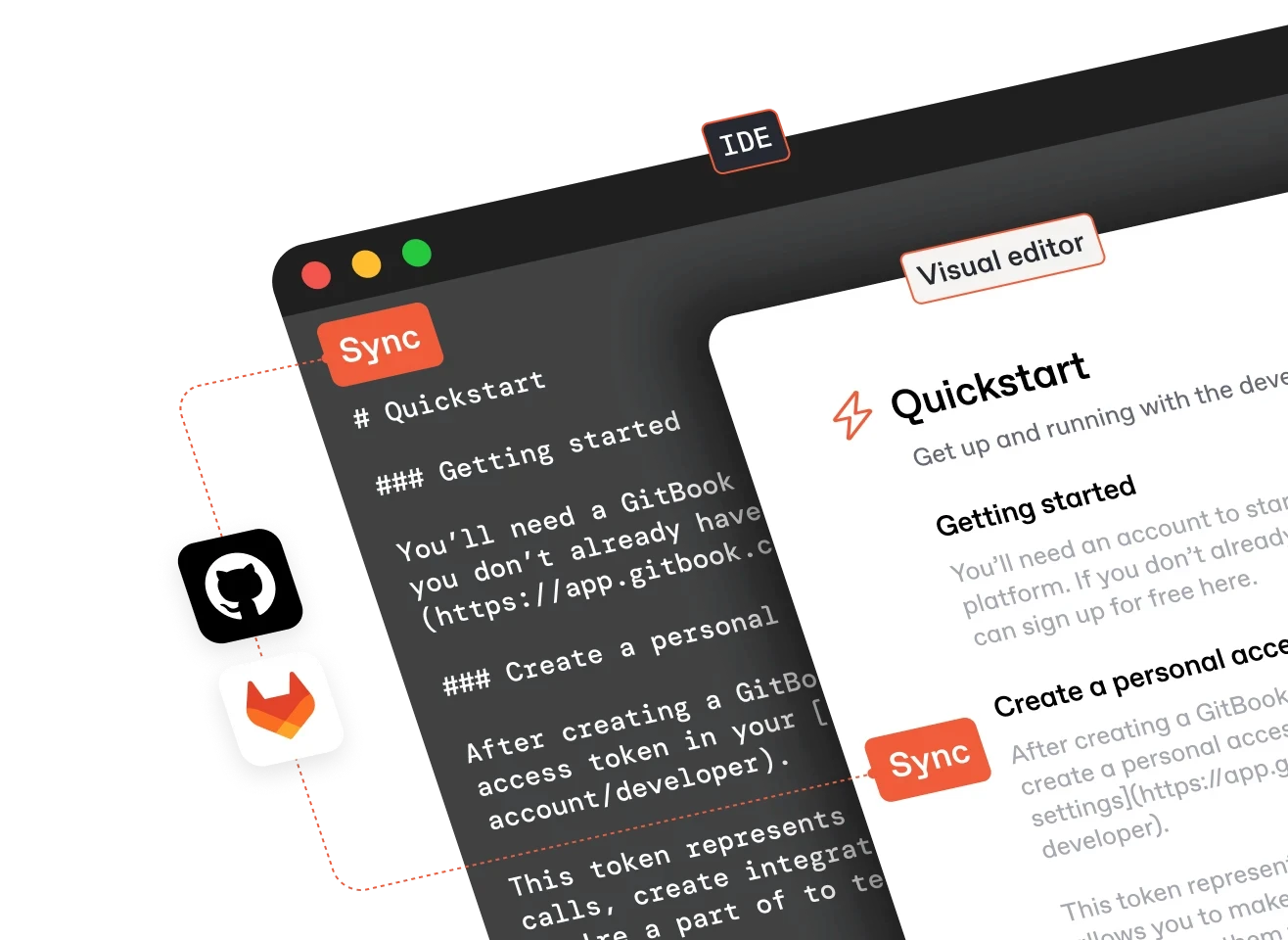




How Git Sync works
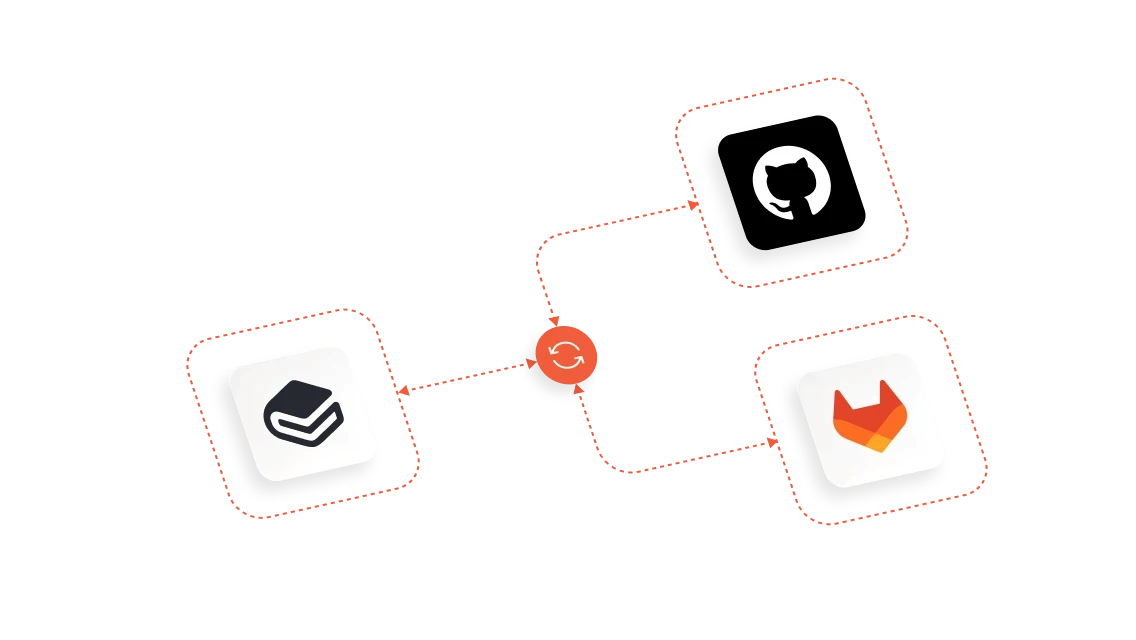
Connect GitBook to GitHub or GitLab, then edit, review, and publish from either side while your content stays in sync.
01
Connect GitBook to a GitHub or GitLab repository
02
Edit Markdown in your repo or in GitBook’s visual editor
03
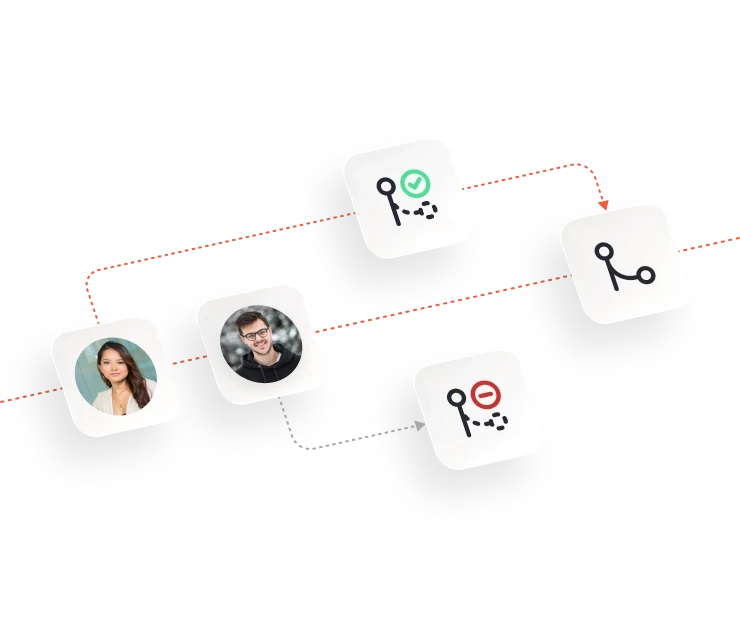
Use branches, reviews, and merge rules to control what’s published
04
Changes stay in sync across GitBook and your repository



Integrate with your
Git workflows
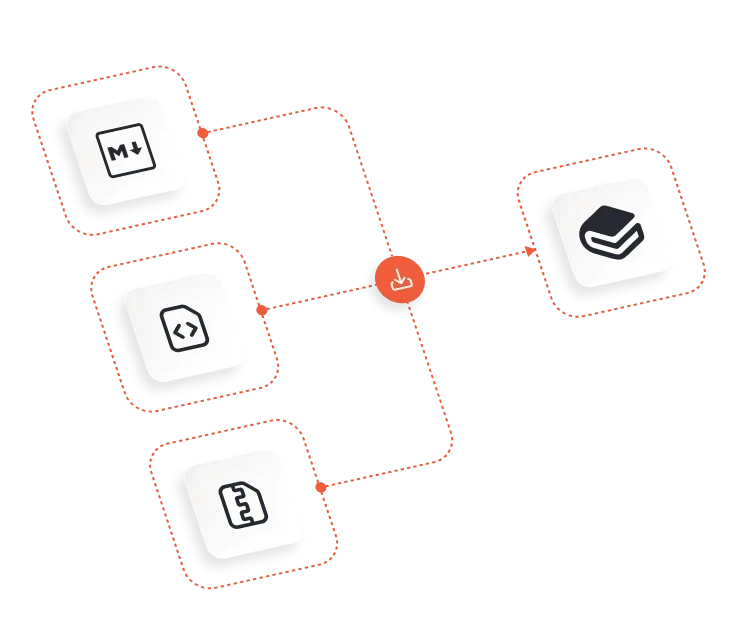


GitHub & GitLab Sync
Synchronize your GitBook docs with GitHub or GitLab with GitBook’s bi-directional integration

FAQs
What is Git Sync?

Does GitBook support docs-as-code workflows?
Can I use Git branches and pull-request-style workflows?
Can I import existing documentation via GitHub or GitLab into GitBook?
Do developers have to leave their code editor to update GitBook?