Industry
Published:
19 May, 2026
5 things we’re still thinking about after Write the Docs Portland

AI summary
Write the Docs Portland 2026 highlighted key industry shifts, revealing a professional community carefully balancing AI anxiety with cautious curiosity about its future utility. Beyond AI, attendees focused on the persistent challenge of proving documentation's value and the growing need for rigorous data and research to support the field.
Write the Docs Portland is one of those conferences that’s hard to describe to someone who hasn’t been. It’s not a trade show, or a sales floor with lanyards and swag bags (although we did have some cool swag). It’s a few hundred people who genuinely care about documentation — technical writers, developer advocates, engineers who write docs on the side — coming together to share what they’ve learned and what they’re still figuring out.
We were there this year as part of the GitBook team, and we came back with a lot to think about. Here are the things that stayed with us.
1. The conversations here are different
WTD has great talks and a genuinely useful unconference, but what surprised us most was the quality of the conversations in between. People at WTD tend to be unusually candid.
They’ll tell you what’s actually going wrong on their team, what they’re afraid of, what they’re proud of. Whether it was in line for snacks, at the sponsor booths, during the Writing Day workshops, or the Monday night social, conversations always feel real and honest.
Part of it is the community itself. A lot of attendees have known each other for years through the WTD Slack or past conferences, so there’s already a baseline of trust. For us, it felt less like networking and more like hanging out with friends and getting an honest look at what’s actually happening in the field — which, frankly, is harder to come by than you’d think.
2. There’s real anxiety about AI — and real curiosity too
There's no way to attend a documentation conference in 2026 without encountering the question of AI. It was in the sessions, in the unconference topics, in side conversations everywhere.
What struck us wasn’t the fact that the topic was on everyone’s minds — that’s understandable, and honestly reasonable — but how people were sitting with it. There was some anxiety, but also a cautious curiosity about what it actually means for the work.
The conversations we had suggested that a lot of technical writers see a version of the future where AI handles more of the mechanical parts of documentation, like first drafts, formatting, and routine updates. That will free them up for the work that requires genuine expertise: understanding users, structuring information well, making judgment calls about what matters.
This is an empowering framing, and on the whole people seemed to want to move toward it. What they were looking for was practical guidance on how to get there from where they are today.
There’s still a lot of ground to cover. But the disposition we encountered was open and forward-looking, and that felt meaningful.
3. Proving the value of docs is still the unsolved problem
If there was one theme aside from AI that came up again and again, it was measurement. How do you show that documentation is working? How do you make the case to leadership? How do you empirically improve your docs?
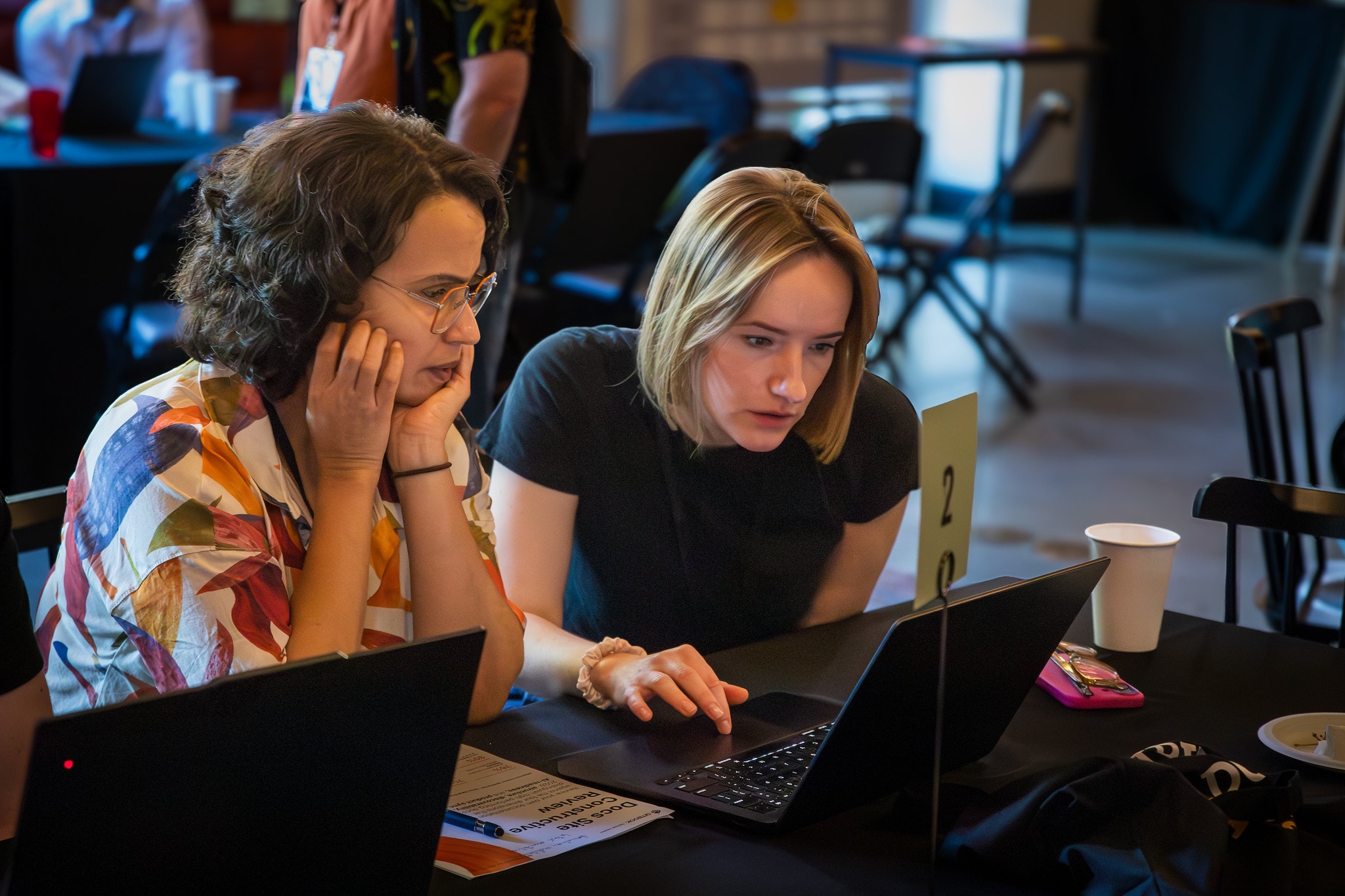
This isn’t a new problem for the field, but it felt especially charged right now. With teams getting leaner and budgets under more scrutiny, the ability to articulate the value of good documentation has become genuinely important. People weren’t just asking philosophical questions, but were looking for concrete frameworks, metrics that would actually hold up in a conversation with an engineering manager or a VP.
We heard this from people at a range of companies, including folks from larger organizations who had more resources but were still struggling with the same underlying question. The fact that this keeps being the unsolved problem is something we think about at GitBook too — it’s part of why features like AI consumption insights and content analytics matter to us beyond just product differentiation.
Sarah (our Docs Lead and co-author of this post) is working on a guide that will go live later this week to dive into this in more detail — stay tuned for that!
4. The field is hungry for data about itself
We brought physical copies of the 2026 State of Docs report to Portland, and people were genuinely excited about it — not just to have it, but to talk about what was in it. Several people mentioned that findings from the report had helped them make a case internally, or had put language to something they’d been trying to articulate for a while. Many asked about participating in the next cycle of research.
What that told us is something we suspected but hadn’t seen so clearly before: technical writers often operate without much external validation of what they know intuitively — that documentation matters, measurement is hard, or the role is changing. Having research that takes those questions seriously and tries to answer them rigorously is filling a real gap, both as a resource, and as a kind of signal that the field is worth studying.
We’re already thinking about what the next State of Docs cycle looks like. If you’re interested in being part of the research — as a survey respondent, an interviewee, or a contributor — we’d love to hear from you.
5. Community is doing the work that the industry isn't
One thing that makes WTD different is that it’s community-organized. The talks come through an open CFP process, the unconference sessions are proposed and led by attendees themselves, and the whole event is run by a small, volunteer-heavy team rather than a corporate parent.
The result is a program that tends to reflect what people are actually working on, and a room that feels like it belongs to the people in it.
That felt especially important this year. In a moment when a lot of the conversation about documentation is being driven by tool vendors (us included, we’ll acknowledge), WTD is a place where the people who actually write the docs get to set the terms. We left feeling like that’s something worth protecting.
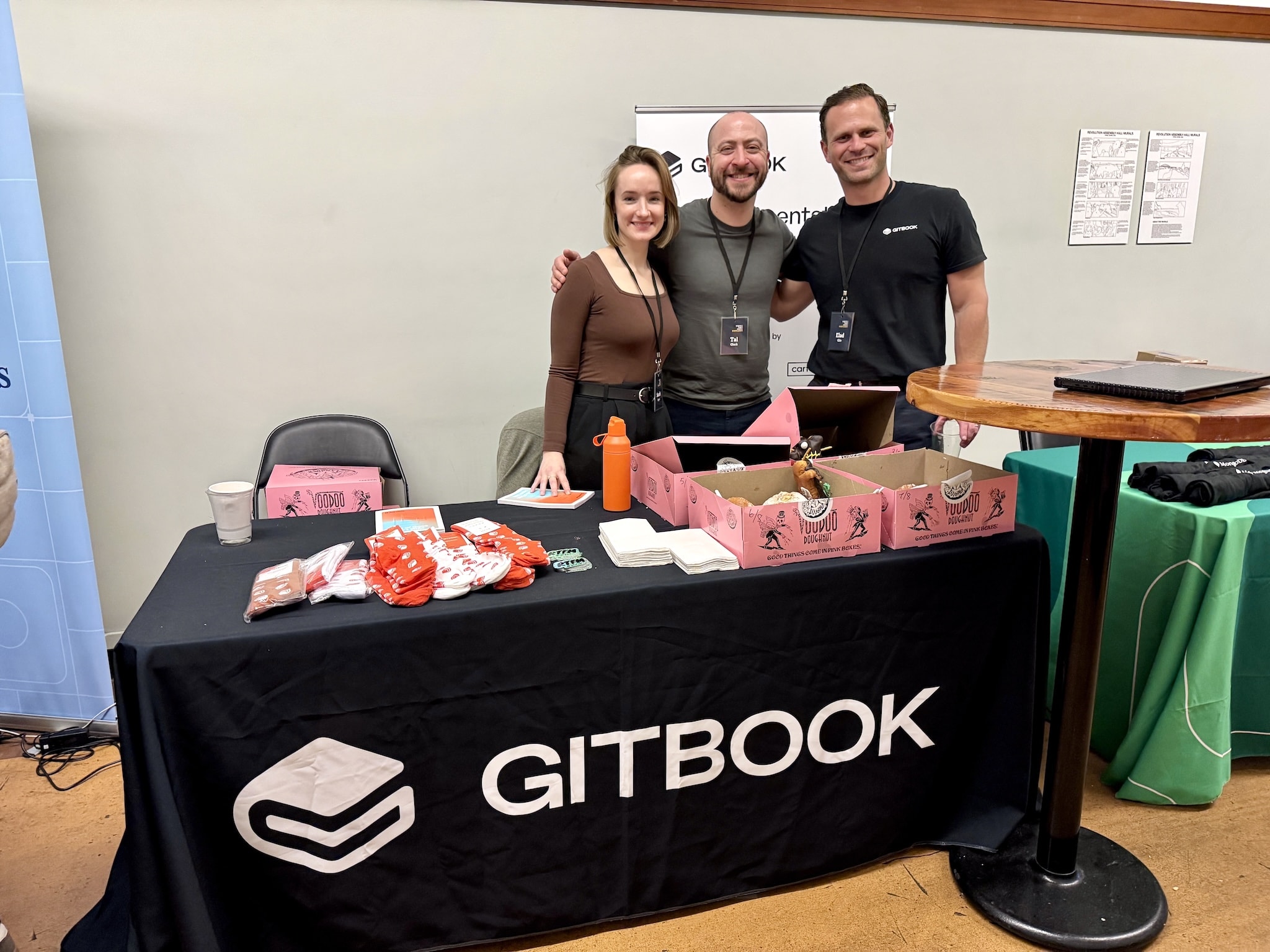
We’re already looking forward to WTD Berlin! If you were at WTD Portland and want to compare notes, drop us an email — we’d love to hear from you. And if you missed it and want to know more about what we’re working on, come find use at WTD in Berlin in September!
→ Read the 2026 State of Docs report
Share



Read more
Industry
Get the GitBook newsletter
Get the latest product news, useful resources and more in your inbox. 130k+ people read it every month.

25 Aug, 2026
The writing was never the hard part: notes from the State of Docs panel with WTD NYC

Tal Gluck
DevRel

3 Aug, 2026
Improving your docs and advocating for them are two different jobs
Tal Gluck
DevRel

22 Jun, 2026
Supporting AI standards at GitBook: What OKF, MCP and llms.txt tell us about the future of docs

Steven Hall
Head of Engineering
Accurate docs. Better answers.
Your docs are already feeding AI. Are users getting the right answers or the wrong ones?
Accurate docs. Better answers.
Your docs are already feeding AI. Are users getting the right answers or the wrong ones?
Accurate docs. Better answers.
Your docs are already feeding AI. Are users getting the right answers or the wrong ones?
Product
Create & Publish
Solutions
Resources

© 2026 Copyright GitBook INC.
440 N Barranca Ave #7171, Covina, CA 91723, USA. EIN: 320502699
Get an AI summary




The State of Docs Report 2026
State of Docs brings together insights from documentation experts from across the industry
Product
Create & Publish
Solutions
Resources
© 2026 Copyright GitBook INC.
440 N Barranca Ave #7171, Covina, CA 91723, USA. EIN: 320502699
Get an AI summary
The State of Docs Report 2026
State of Docs brings together insights from documentation experts from across the industry

Product
Create & Publish
Solutions
Resources
© 2026 Copyright GitBook INC.
440 N Barranca Ave #7171, Covina, CA 91723, USA. EIN: 320502699
Get an AI summary
The State of Docs Report 2026
State of Docs brings together insights from documentation experts from across the industry