Industry
Published:
11 Feb, 2026
AI is the new marketing funnel — and your docs decide who wins
AI summary
Documentation has evolved into a critical growth engine, as AI-driven discovery now represents the top of the marketing funnel where high-intent leads research and evaluate products. To stay competitive, companies must prioritize Generative Engine Optimization (GEO) by ensuring their product knowledge is structured, readable, and authoritative for AI models. Ignoring this shift means losing control over how your product is presented, while proactive optimization turns documentation into a powerful, high-converting sales asset.
Most teams still treat documentation like a cost center. Something you have to publish for onboarding, support, or compliance. But that mindset is about to get expensive.
Because AI has quietly become the new top-of-funnel. And your docs are increasingly the primary thing deciding whether someone ever talks to sales, clicks your pricing page, or chooses your competitor instead.
The companies winning right now aren’t just building better products. They’re building the most AI-readable product knowledge on the internet. And in 2026, that’s not a content strategy — it’s a growth strategy.
What is AI optimization (GEO)?
If SEO is about ranking in search engines, GEO (generative engine optimization) is about showing up in AI answers.
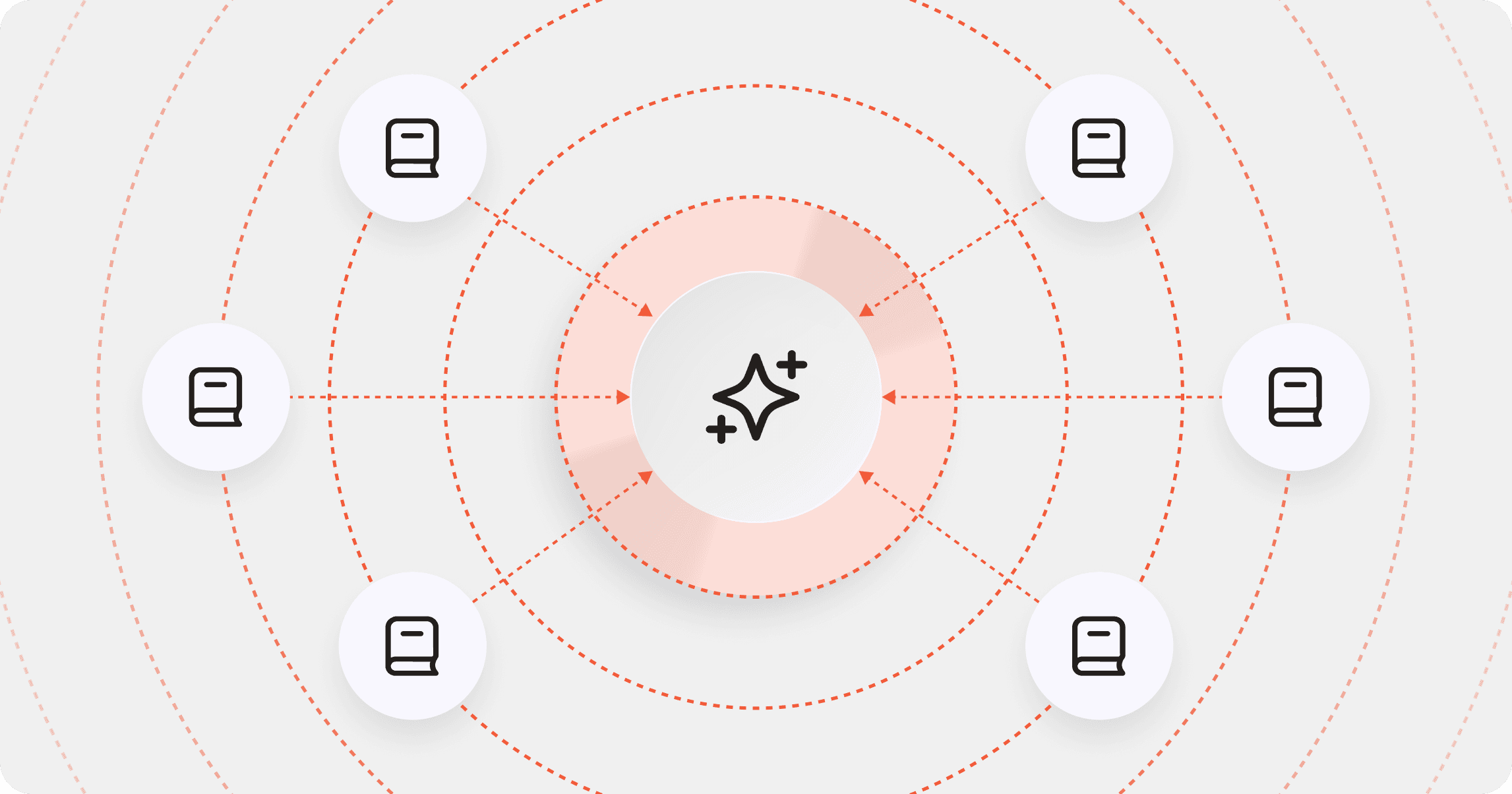
GEO is all about structuring and publishing content so tools like ChatGPT, Perplexity, Gemini, and Claude can reliably understand it, cite it, and recommend it in responses. This is why AI optimization is quickly becoming a board-level concern. Not because it’s trending — but because it’s where discovery is moving.
And just like SEO evolved from “stuff keywords on a page” to technical performance, structure, and authority — GEO is already following the same trajectory.
Why is this important now?
Unlike Google, AI isn’t just another traffic source — it’s a decision engine.
When someone asks an AI tool, “What’s the best way to do X with Y product?”, they aren’t casually browsing. They’re actively evaluating, comparing options and asking the kinds of questions that used to happen on sales calls — the more detailed questions that a quick Google search can’t answer. And increasingly, the AI’s answers are built on documentation.
At GitBook, we’ve seen this shift firsthand. AI-driven page views were 6x higher this January year-on-year. And that’s not a short-term blip — it’s a behavior change.
More importantly, our data shows that leads coming from AI tools like ChatGPT convert 4x more than leads from organic search.
That should change how you think about documentation immediately.
Because it means AI isn’t only sending you visitors early in their discovery process. It’s also sending you people who are already deep into the funnel — asking specific, high-intent questions like:
“What’s the best AI-ready platform that integrates with our stack?”
“How long will implementation take?”
“What’s the best practice for migrating from a competitor?”
“How does pricing work at scale?”
Those are marketing and sales questions. And AI is going to answer them — whether it’s you providing the context, or your competitor.
If your documentation is thin, scattered, outdated, or hard for models to parse, you don’t just lose traffic — you lose control over how your product is presented to those qualified leads.
If you’re not writing for both humans and AI, you’re already behind
Here’s the uncomfortable truth: AI is telling prospective customers about your product right now.
And if your documentation doesn’t clearly explain what your product does, how it works, and why it’s different — AI will fill in the gaps. With competitor content, Reddit threads, or guesswork.
And this is where a lot of teams get blindsided. They assume AI discovery is just ‘SEO, but newer’. But GEO changes the rules because the AI doesn’t just rank your page — it summarizes your product.
That means your docs are no longer only a reference library for existing customers — they’re the raw material for your positioning in AI responses.
Forward-thinking teams like Nvidia and Gravitee are already optimizing their AI documentation to make sure the answers customers get are accurate, differentiated, and aligned with how they want to be understood.
Custom docs platforms aren’t built for optimization
This is where the ‘buy vs build’ decision really makes an impact. Because a custom docs site might look fine on the surface, but when GEO becomes part of your growth engine, the hidden costs show up fast. Because an documentation platform isn’t just a tool to publish pages — it’s core infrastructure.
With a custom platform, every optimization becomes a technical project. Whether it’s structuring content for AI readability, supporting modern formats and standards that AI tools expect, or building search, assistants and integrations on top.
And even if you do ship all of that, it’s usually bolted on rather than integrated. And it pulls your engineers away from improving your product.
Meanwhile, your marketing team writes landing pages, your support team writes help articles, and your sales team builds enablement docs somewhere else.
And the result? You end up with a documentation experience that’s expensive to maintain, hard to scale, and poorly optimized for AI consumption.
In a world where documentation is becoming a competitive advantage, custom builds are often the slowest path forward.
Want to see how your own docs stack up for AI-readability? GitBook’s agent-readiness checker lets you check whether agents can actually reach, parse, and understand the docs you’re relying on as part of your funnel.
Choose GitBook: the platform that optimizes automatically
GitBook isn’t just a publishing tool — it’s an AI documentation platform designed for modern product teams who need their knowledge to work for humans and machines.
When you publish in GitBook, you’re not starting from scratch on AI optimization. The platform is built around structured content, clean Markdown, and conventions that enable reliable AI ingestion.
GitBook also supports AI-first standards like llms.txt and llms-full.txt, helping generative engines understand your documentation more completely.
And because GitBook is designed for real product teams, it doesn’t stop at publishing.
You can sync your docs to your Git repository, manage changes with review processes, and keep documentation aligned with your product as it evolves — without turning every update into a last-minute scramble.
GitBook also takes things further, with AI-native capabilities including:
GitBook Assistant – so users can ask questions directly inside your docs
GitBook Agent – to help teams maintain, improve, and scale content faster
MCP server generation – so your documentation can power AI tools and workflows beyond the browser
In other words, GitBook doesn’t just help you write documentation — it turns your documentation into a growth asset.
The new funnel is already here
AI is now where buyers compare and validate. And increasingly, it’s where they make final decisions. Which means your documentation is no longer just an onboarding tool — it’s pre-sale leverage.
The teams that recognize and act on this market shift today will own the AI narrative for their category — and capture the highest-intent leads before competitors even realize what changed.
If you want the platform that makes AI documentation and GEO feel effortless, try GitBook today.
→ Learn more about how GitBook optimizes docs for AI
→ Discover GitBook’s built-in AI Assistant
→ AI docs readership increased over 500% in 2025. What does it mean for you?
Share



Read more
Industry
Get the GitBook newsletter
Get the latest product news, useful resources and more in your inbox. 130k+ people read it every month.

3 Aug, 2026
Improving your docs and advocating for them are two different jobs

Tal Gluck
DevRel

22 Jun, 2026
Supporting AI standards at GitBook: What OKF, MCP and llms.txt tell us about the future of docs

Steven Hall
Head of Engineering

18 Jun, 2026
What is OKF? Understanding Google’s Open Knowledge Format

Steve Ashby
Content Lead
Accurate docs. Better answers.
Your docs are already feeding AI. Are users getting the right answers or the wrong ones?
Accurate docs. Better answers.
Your docs are already feeding AI. Are users getting the right answers or the wrong ones?
Accurate docs. Better answers.
Your docs are already feeding AI. Are users getting the right answers or the wrong ones?
Product
Create & Publish
Solutions
Resources

© 2026 Copyright GitBook INC.
440 N Barranca Ave #7171, Covina, CA 91723, USA. EIN: 320502699
Get an AI summary




The State of Docs Report 2026
State of Docs brings together insights from documentation experts from across the industry
Product
Create & Publish
Solutions
Resources
© 2026 Copyright GitBook INC.
440 N Barranca Ave #7171, Covina, CA 91723, USA. EIN: 320502699
Get an AI summary
The State of Docs Report 2026
State of Docs brings together insights from documentation experts from across the industry

Product
Create & Publish
Solutions
Resources
© 2026 Copyright GitBook INC.
440 N Barranca Ave #7171, Covina, CA 91723, USA. EIN: 320502699
Get an AI summary
The State of Docs Report 2026
State of Docs brings together insights from documentation experts from across the industry